Self Check-In
“Until you make the unconscious conscious, it will direct your life and you will call it fate.” — Carl Jung
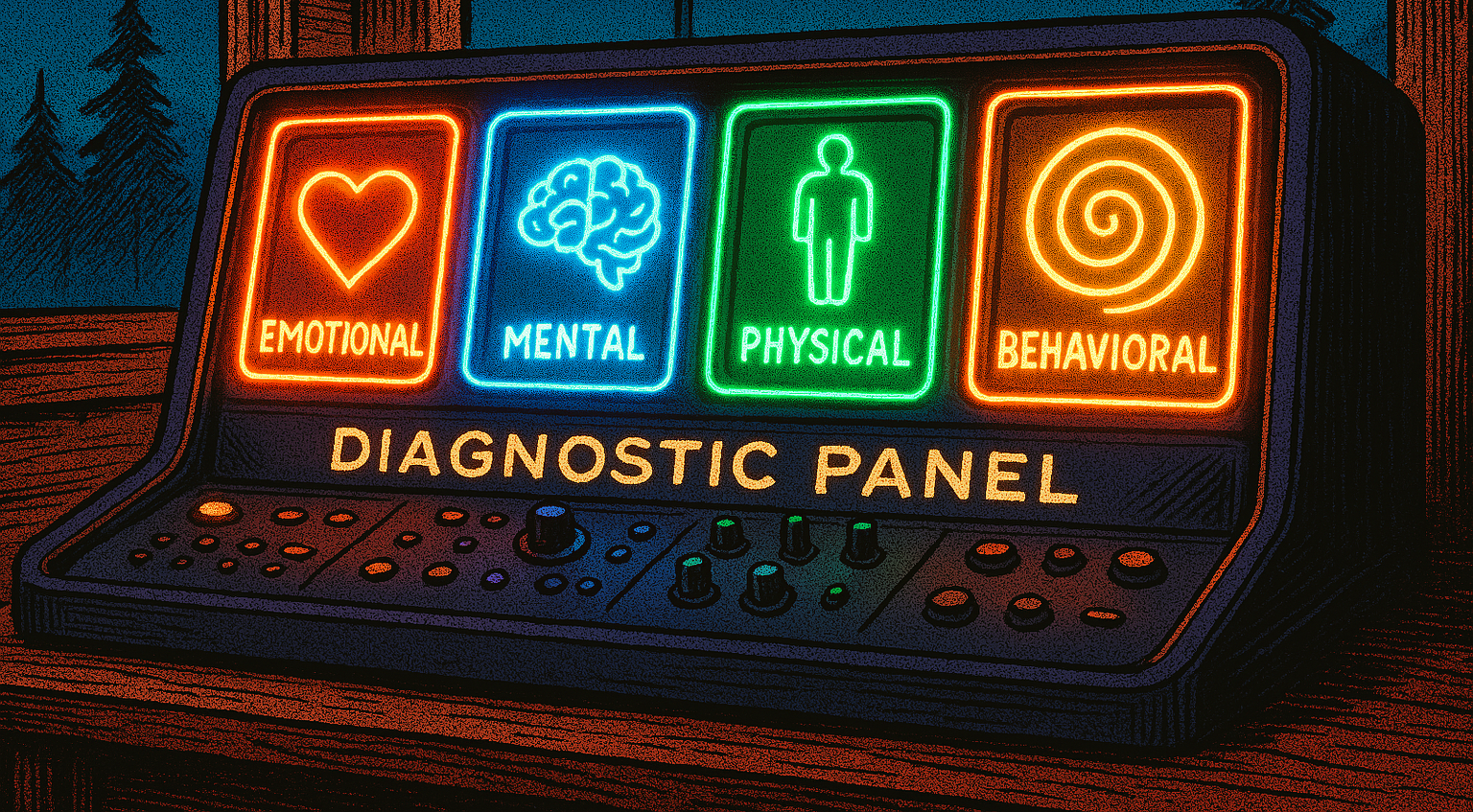
A self check-in is a simple, yet effective mindfulness habit where you pause and ask, “How am I really doing right now—mentally, emotionally, physically?” It’s like taking a moment to check in with yourself, almost like talking to a friend: “Are you okay?” By doing this regularly, you increase self-awareness and give yourself the chance to address small stresses before they build up. It’s about tuning in, being kind to yourself, and preventing burnout or overwhelm.
A self check-in might look like taking a minute to sit quietly, noticing, “My shoulders are tight (body), I’m still feeling anxious from that meeting (mind), and I’m frustrated (emotion).” From there, you can decide what you need – maybe a break, a snack, or a conversation. It’s about catching those feelings early, so they don’t get pushed aside and cause problems later. Think of it like brushing your mental teeth – a regular routine to keep your mind clear.
Self check-ins are most effective when done regularly. Set a reminder or link them to specific moments (like after meals or before bed). The key is to be gentle with yourself. The point isn’t to ask, “Am I perfect?” but instead, “What’s going on with me right now, and what do I need?” Over time, these check-ins help you notice patterns and make proactive choices to care for yourself. Plus, they prevent emotional build-up. If you catch yourself feeling irritated, you can choose to deal with it before it leads to snapping at someone. It’s a habit that increases your presence, helps you manage your emotions, and keeps you balanced. Self check-ins are an easy, effective way to stay connected to yourself, making it easier to respond to your needs rather than react in stressful moments.
Practical Tips
A solid self check-in includes an assessment of your mental, emotional, and physical state, helping you become more in tune with yourself. It should also help you notice patterns in your behavior, giving you the insight to make proactive, thoughtful choices.
- Set a Regular Routine: Try making self check-ins a regular habit by setting aside a moment each day. For example, you could take 2-3 minutes each morning before starting your day to check in with yourself. Ask simple questions like, “How am I feeling about the day ahead?” or “How did I sleep?” You can do the same in the middle of the day or before bed. You could even set reminders on your phone to help you remember. The key is consistency, so it becomes a natural part of your routine.
- Use Guiding Questions: If you’re not sure how to start, ask yourself basic questions like, “What’s going on with my body, emotions, and mind right now?” You might consider how your body feels—are you hungry, tense, or energized? Then, check in with your heart (emotions)—are you feeling calm, anxious, or happy? Finally, take a look at your brain (thoughts)—are your thoughts scattered or focused? You can also ask yourself what you might need right now (e.g., water, a break, connection). Some people find it helpful to use a scale, like “On a scale of 1-10, how stressed am I?” Find a format that feels easy and natural for you.
- Write it Down (if possible): Journaling your self check-in can be really helpful. Each day, take a moment to write down how you’re feeling, like: “Morning check-in: I feel groggy (body), a bit anxious (emotion) about the meeting later, and my mind is replaying the argument from yesterday (thoughts).” Writing things down helps clarify your state and gives you a record to look back on. Over time, you may notice patterns, like, “I often feel low on Tuesdays—maybe it’s because of poor sleep on Mondays.” Your journal can also include an intention or action: for example, “Intention: be kind to myself today since I’m anxious” or “Action: do a 5-minute meditation to calm down.” If writing every day feels like too much, even checking in a couple of times a week, or whenever you feel a bit off, can be helpful. And if journaling isn’t an option, a mental check-in can still offer valuable insight—it’s just an extra tool to help you connect with yourself.
- Practice Non-Judgment: The key to a helpful self check-in is to avoid judgment. Instead of viewing your feelings as a “report card,” treat them as useful data. For example, if you notice that you feel “lazy and depressed,” don’t start thinking “I shouldn’t feel this way, what’s wrong with me?” Instead, respond to yourself the way you would to a friend: “I’m sorry you’re feeling down. It’s okay to have those days. What might help you?” The goal is to acknowledge and accept where you are without judgment. If you find emotions like guilt or anger, try to observe them neutrally, like saying, “Anger is here, okay,” and thank yourself for noticing. Remember, whatever you’re feeling is already there, so judging it only adds more negativity. Self check-ins are about building self-compassion, so be kind to yourself. If you catch yourself being critical (e.g., “I’m tired, but it’s your fault for staying up late!”), pause and reframe: “I see that I’m tired. I’ll aim to get better sleep next time. For now, I’ll take it easy.” Practicing this non-judgmental approach can help reduce self-criticism in the long run.
- Use Tech Aids: You can use technology to help with your check-ins. There are mood-tracking apps (like Daylio or Moodnotes) where you can log your mood and thoughts each day. Some even send you reminders like “How are you feeling?” at set times. Or setting a daily alarm on your phone that says “Check in with yourself” can be a helpful nudge. You could also record a voice memo or do a quick video diary. These tools can make your check-ins more interactive or easier to keep up with. That said, if tech ends up becoming a distraction, it’s perfectly fine to keep it simple – even just taking a few mindful breaths at your desk can be a check-in. The key is finding a method that works for you and is easy to stick with.
- Incorporate Breath or Grounding: When you check in, especially if you’re feeling frazzled, start with a few deep breaths or a grounding exercise. For example, inhale slowly for 4 seconds, exhale for 6 seconds, do that 3 times. This calms your nervous system slightly, which can help you sense what’s going on more clearly. Alternatively, do a quick body scan: close your eyes and move your attention from head to toe, noticing sensations. This doubles as both a check-in and a mini relaxation. By calming yourself, you might better hear the subtle signals (like, “Oh, I notice my jaw is clenched, I must be more stressed than I realized”). It sets a mindful tone, reinforcing that the check-in is a quiet, safe moment just for you.
- Ask “What Do I Need Now?” Self check-ins are just as valuable when things are going well as they are when you’re feeling off. If you check in and find that you feel calm, content, or productive, take a moment to acknowledge that! Celebrating these small wins helps you reinforce the positive aspects of your day. You might note, “I handled that stress pretty well, and I feel good about it.” Recognizing these moments shifts your focus and boosts your gratitude, helping you stay grounded in the present. Plus, acknowledging the good helps balance your perspective, reminding you that not every moment is anxious or tired. It’s a simple way to build self-confidence and maintain a positive outlook.
- Celebrate or Acknowledge Positives: Self check-ins aren’t only for when you feel bad. They’re also to notice good or neutral states. If you check in and find, “Hey, I actually feel calm and content right now,” acknowledge that! It’s important to honor positive feelings too, not just problems. You might think, “I’m doing okay – that’s nice to see.” Maybe even jot it down: “Felt really productive and in good spirits this afternoon.” This helps reinforce what contributes to good days. It also balances your perspective; sometimes we assume we’re always anxious or always tired, but check-ins might reveal many moments of okay-ness or happiness that we overlook. Recognizing those positives can boost your gratitude and mood. Plus, giving yourself credit builds self-confidence. So, celebrate the wins, no matter how small, during check-ins.
- Adjust as Needed: Keep in mind that self check-ins are flexible and should work for you. If certain times of the day aren’t ideal for checking in, try another time. If your usual prompts start to feel repetitive, switch them up. The goal is to make sure you’re truly tuning in to yourself, not just going through the motions. Some days, a quick check-in will do, while other times, you might explore your thoughts and feelings more deeply. There’s no right or wrong way, though consistency is key. If you miss a day, don’t worry about it, just pick it up again.
Example Scenario
Monica started working from home full-time and quickly noticed her days blending together, with stress gradually building. She realized she wasn’t taking time to listen to herself, so she decided to start a new habit: self check-ins. Each morning, before diving into emails, Monica takes a moment with her coffee and writes a quick journal entry, asking herself, “How do I feel today? What’s my mental weather?” One morning, she writes, “I feel groggy and a bit anxious. My body is sore from sitting hunched over the laptop. Emotionally, I’m dreading the big project due Friday.” Noticing this, she asks, “What do I need?” She realizes she hasn’t been stretching, so she spends 5 minutes doing gentle yoga, which helps with the soreness, and writes out a mini-plan for the project to ease her anxiety.
Around lunchtime, a reminder pops up on her phone: “Check in: Head-Heart-Body.” She notices that she’s getting irritable (heart) and unfocused (head), and her body feels tense. Because she takes the time to check in, she decides to take a real lunch break. She makes a healthy sandwich and spends 10 minutes outside for some fresh air. This small midday reset boosts her mood and productivity, something she might have skipped without that self check-in reminder.
In the evening, Monica does a quick reflection while brushing her teeth, pairing it with her nightly routine. She asks herself, “What’s one thing I felt strongly about today?” and “Did I address my needs?” That night, she notes, “I felt accomplished after sending off the report. I also recognized I needed a break in the afternoon, and I actually took one – good job.” She feels a small sense of pride and contentment.
After a few weeks, Monica notices these check-ins are incredibly helpful. One Friday, her morning check-in reveals that she’s stressed: “Heart racing, feeling overwhelmed with tasks.” Acknowledging this, she decides to re-prioritize her to-do list and reassures herself: “Just do what you can, it’s okay.” On another day, her check-in is positive: “Pretty energized and happy, slept well.” She records this with gratitude, reinforcing how important restful nights are.
As she continues, Monica starts to notice patterns. For example, she consistently feels down on Wednesdays (midweek burnout), so she starts scheduling fun activities on Wednesday evenings to boost her mood. She also catches herself feeling isolated and takes action by planning a video chat with a friend, preventing loneliness from building up. Most importantly, Monica’s inner voice becomes kinder. When she checks in, it feels like she’s speaking to herself with genuine care, as if she’s checking in on a friend. Over time, this daily practice helps her manage stress and prevent small issues, like muscle tension or mild anxiety, from escalating. She feels more balanced, in control, and better able to take care of herself.
Resources
Article: “10 mindfulness questions to help you check in with yourself” by Calm. A guide on the importance of checking in with yourself through mindful moments to boost self-awareness and emotional health.
Article: “Mindful Check-in Practice” by Mindful.org (2016). A three-minute guided mindfulness practice: how to tune in to the present moment and acknowledge wandering thoughts.
Video: “Mindful Check-In: 7-Minute Video” by Tim Burnett, Mindfulness Northwest. A brief guide to performing a mindful check-in in under 10 minutes, emphasizing self-awareness and mindfulness practices.
Article: “The Check-In Exercise: My Favorite Practice for Practicing Mindfulness in Every Day Life” by Dr. Jennifer Franklin with Don’t Hate Your Guts (2017). Explores how mindfulness check-ins can improve emotional well-being through daily exercises.
Article: “Mindful Check-In To Hit The Pause Button” by Insight Timer. Explores how performing mindful check-ins every day enhances your emotional balance and self-awareness.
Podcast: “Tune Out to Check In: 10-Minute Meditation” by Be The Tortoise (2024). This podcast episode provides a 10-minute meditation practice to help listeners check in with themselves and relax.
Podcast: “Reconnecting with Yourself: A 30-Minute Self-Check-In to Recharge a Refocus” by Mindful Productivity Podcast (2023). Offers a 30-minute session dedicated to mindful check-ins for mental clarity and emotional regulation.
Book: Mindfulness (The Daily Dose – Self Check-Ins) by Mrs. Sam E Christie (2022). A practical guidebook on using self check-ins for improving mindfulness and mental health.
Video: “Self Check-In and Body Scan | World Mental Health Day” by World Health Organization (2023). A guided video for performing a self-check-in and body scan, helping viewers connect with their present emotional state.
Video: “A 12-Minute Meditation to Check in With Your Whole Self” by Mindful.org (2023). A guided 12-minute video focused on checking in with your body, mind, and emotions.